Enclosed hides
Enclosed hides reduce movement and can provide shelter from wind or rain. They may suit longer stationary sessions and equipment that needs a stable position. Check entrance width, seating, viewing slots and the number of observers the structure is designed to accommodate. Do not assume that an enclosed structure is warm, dry or accessible in every season.
Use quiet movement. Avoid occupying a viewing slot for an excessive period when others are waiting. Keep bags and tripods within your space. Flash photography and sudden movement can disturb birds and other observers.
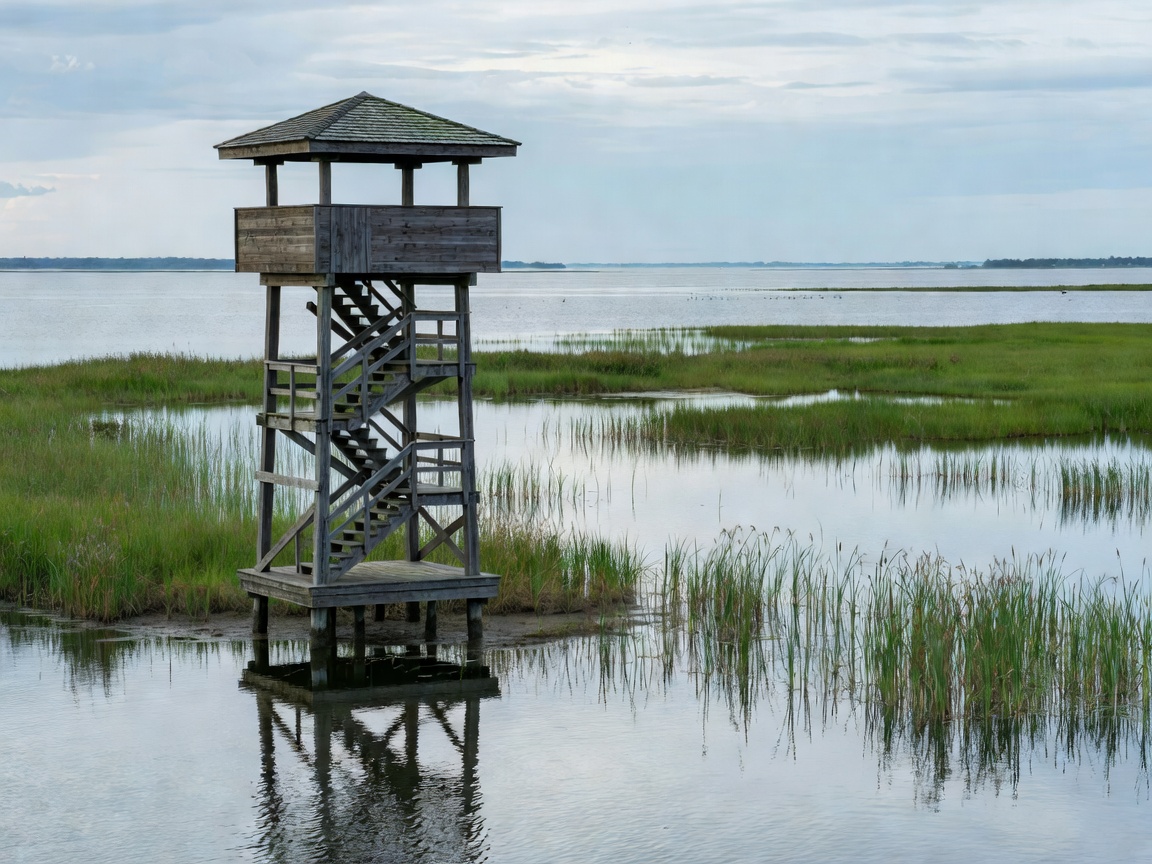
Open platforms and wetland towers
Open platforms and towers increase elevation and sightline. They can show water edges, reed beds and distant habitat boundaries. The trade-off is exposure to wind, sun and rain. Carry layers and secure loose equipment. Stairs may limit access for some visitors, so inspect the access description rather than relying on a photograph.
Forest observation points
Forest viewpoints may be clearings, edges, raised banks or designated pauses beside a trail. Their usefulness depends on light direction and the contrast between cover and open space. Early or late light can change what is visible, but exact behaviour is not predictable. Stay on permitted routes and do not enter dense cover to improve a view.
Coastal viewpoints and reed-bed hides
Coastal viewpoints favour broad scanning but require attention to wind exposure and safe footing. Reed-bed hides provide a closer frame around water margins and vegetation. Both formats can become difficult when glare, rain or strong wind reduces optical contrast. A second viewpoint or sheltered fallback makes the plan more robust.
Equipment and weather
- Binoculars suit general scanning and mobile routes.
- A spotting scope needs stable support and enough space.
- Rain protection should cover optics, notebook and spare layers.
- Muted clothing helps reduce sudden visual movement.
- A small seat or cushion can improve longer sessions where permitted.
Selection criteria
Choose by viewing direction, distance to habitat, shelter, accessibility and expected time at the point. Consider whether the sun will be in front of you, whether the route allows a quiet approach and whether the structure has a safe capacity. Visibility is only one measure. A comfortable, lawful and low-disturbance position is usually the better choice.
Good for
Observation-point planning is good for visitors who prefer stationary sessions, accessible viewing, weather protection or structured habitat comparison.
What to know
Facilities, opening status and accessibility can change. Do not climb barriers, enter closed structures or approach birds for a better image. Respect local rules and other observers.
Planning around mobility or equipment? Send the field desk your requirements →